Most rentals come with the storage the builder thought was enough, which is rarely what the people living there actually need. The good news is that almost every room has space you can use without drilling, painting or asking for a new closet. The trick is to work with freestanding pieces, the backs of doors and the height of the room, and to check each idea against your lease and the surface you are working with before you commit.
- Measure the gap before you shop.
- Use floor-standing pieces before wall-mounted ones.
- Keep the heaviest things low.
1Give the entryway a landing spot
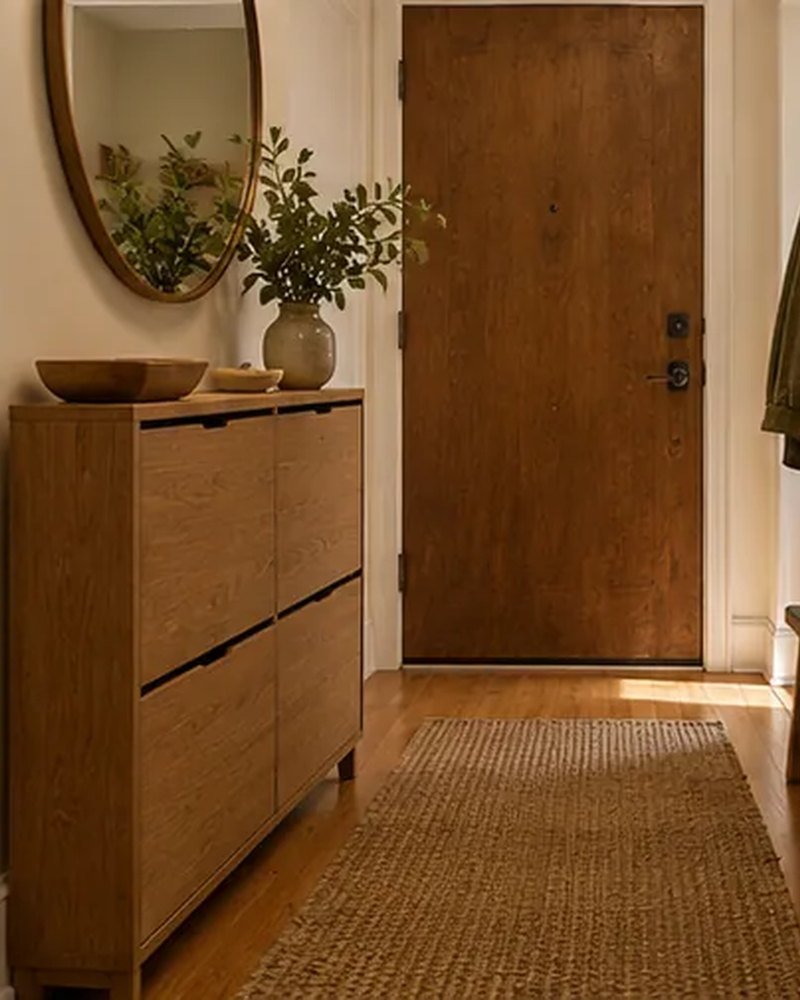
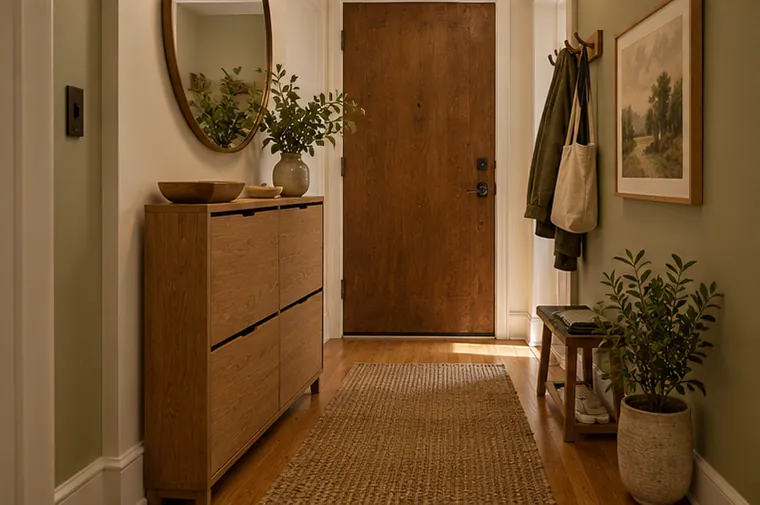
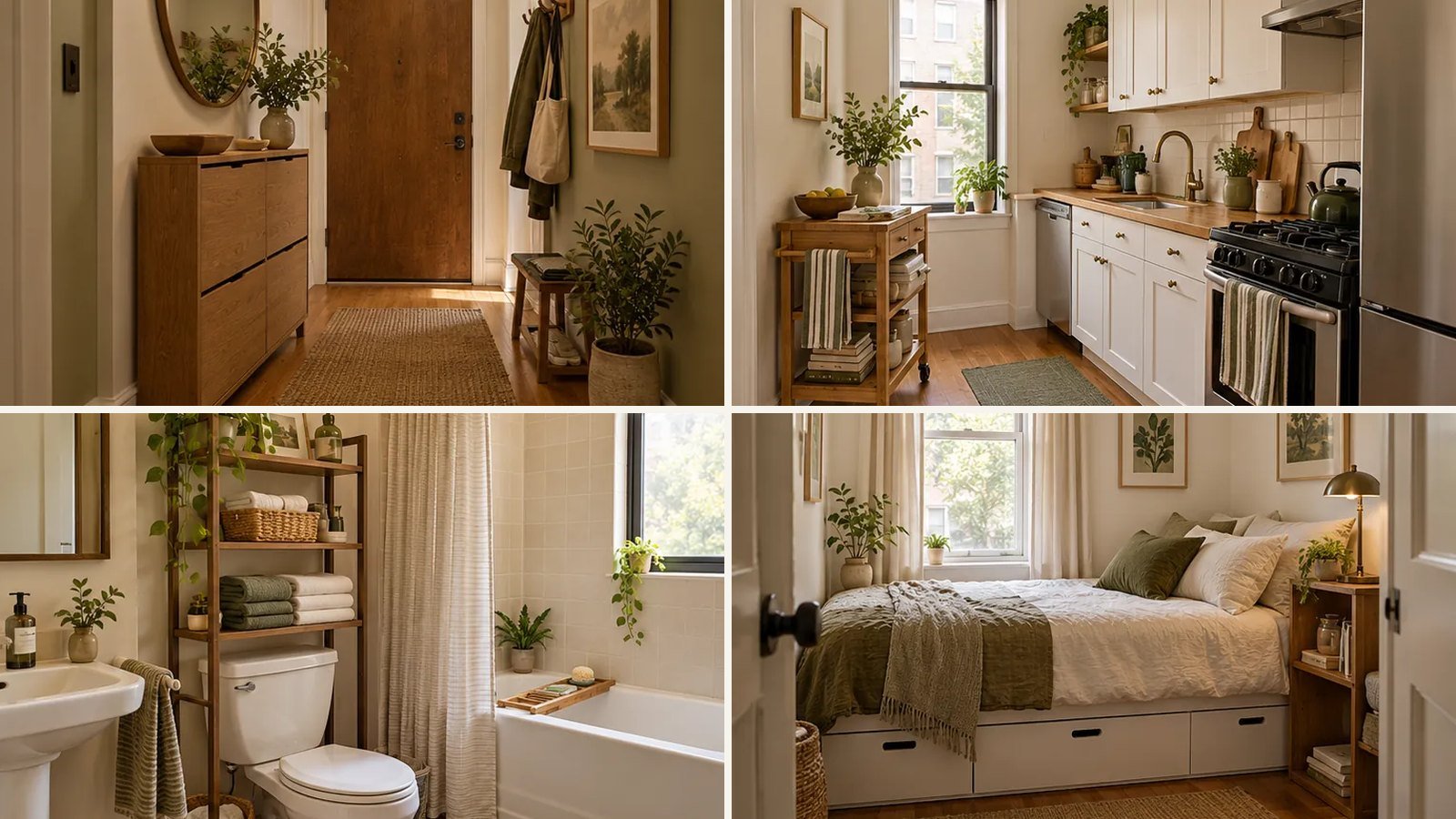
An apartment that opens straight into the living room still needs somewhere to drop keys, shoes and bags. A slim shoe cabinet with tilt-out drawers takes far less depth than a bench, and its top becomes a surface for a tray and a small lamp. Add a freestanding coat rack or an over-the-door hook rail if the wall is off-limits.
Measure the depth between the door swing and the nearest wall before you buy. A cabinet that blocks the door from opening fully will annoy you every day, and it is the most common entryway mistake in small apartments.
2Add a rolling cart to a kitchen with too few cabinets
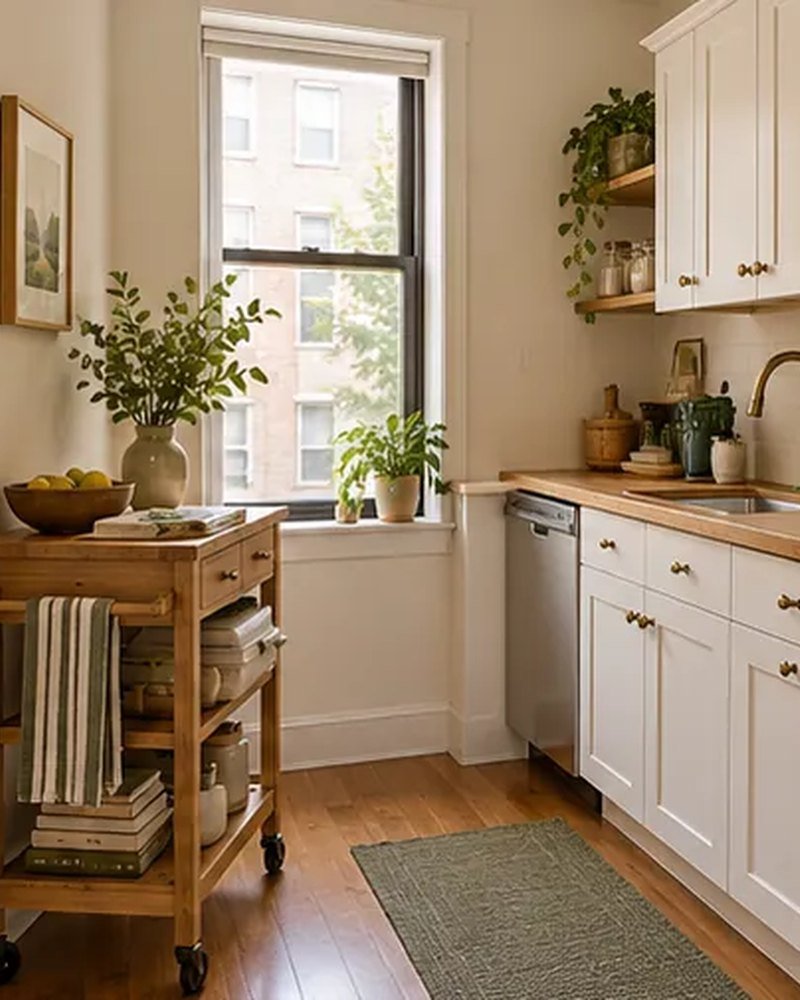
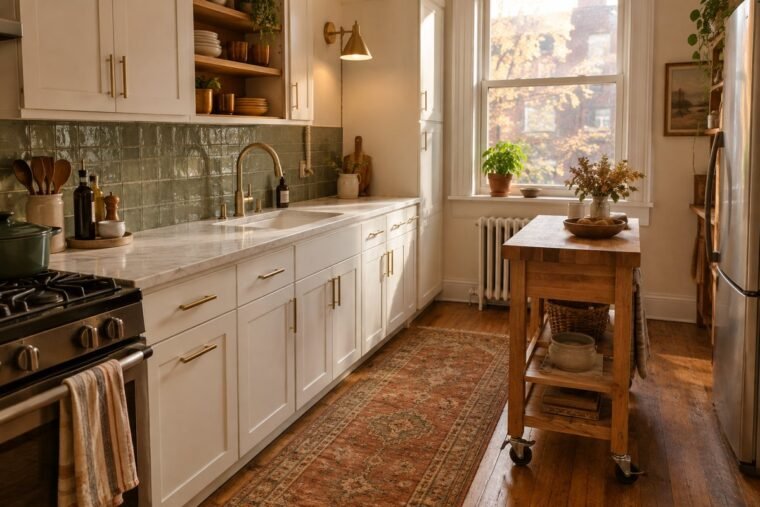
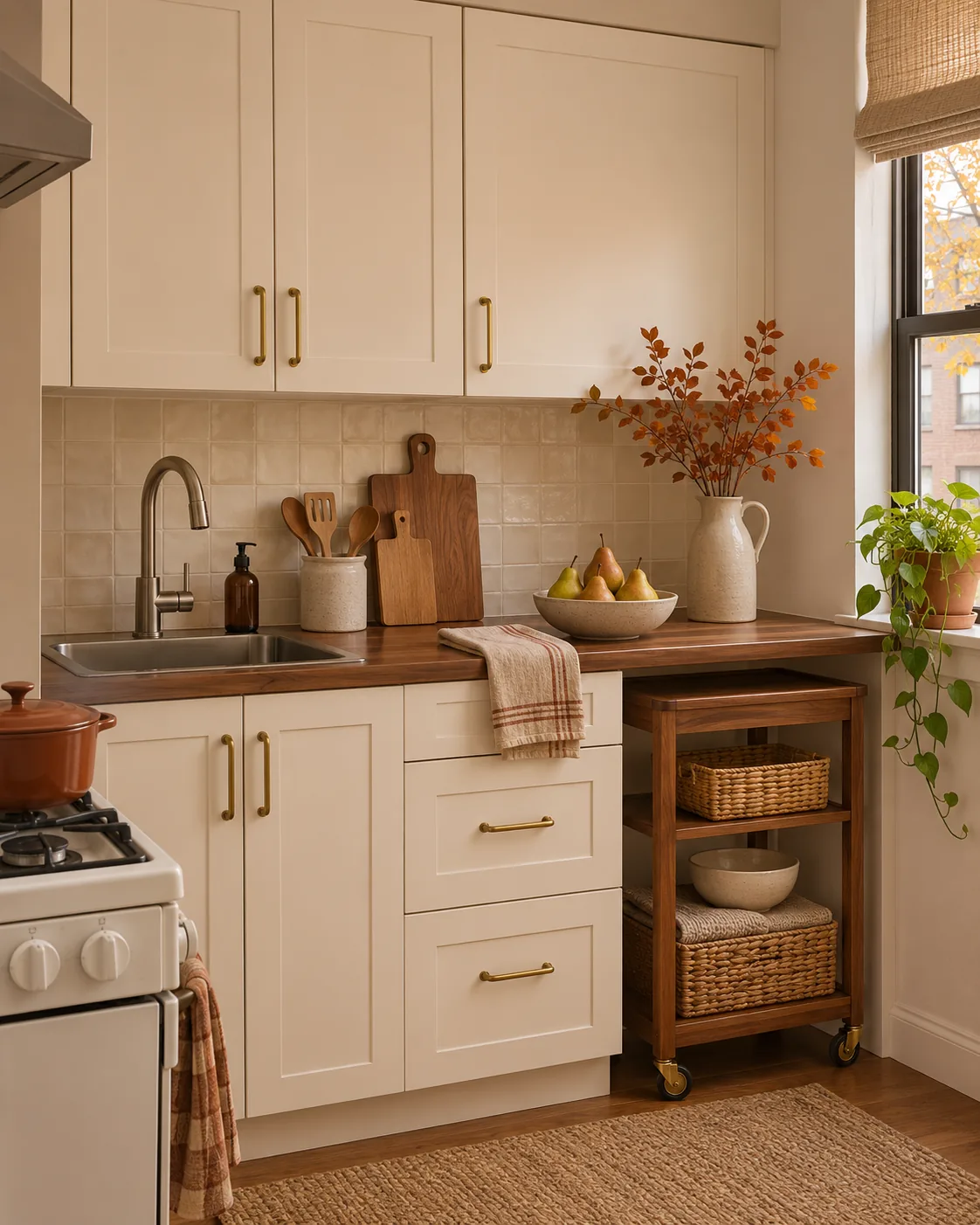
When a kitchen has almost no upper cabinets, a rolling cart does the job of a small pantry. Put daily items on the top shelf, heavier pans on the bottom, and push it into the gap beside the fridge or the end of the counter when you are not cooking.
Look for locking wheels and a solid top shelf. Narrow carts fit in surprisingly tight spaces, so measure the gap at its narrowest point, including baseboards and any pipes, rather than trusting the width at eye level.
3Use the wall above the toilet in the bathroom
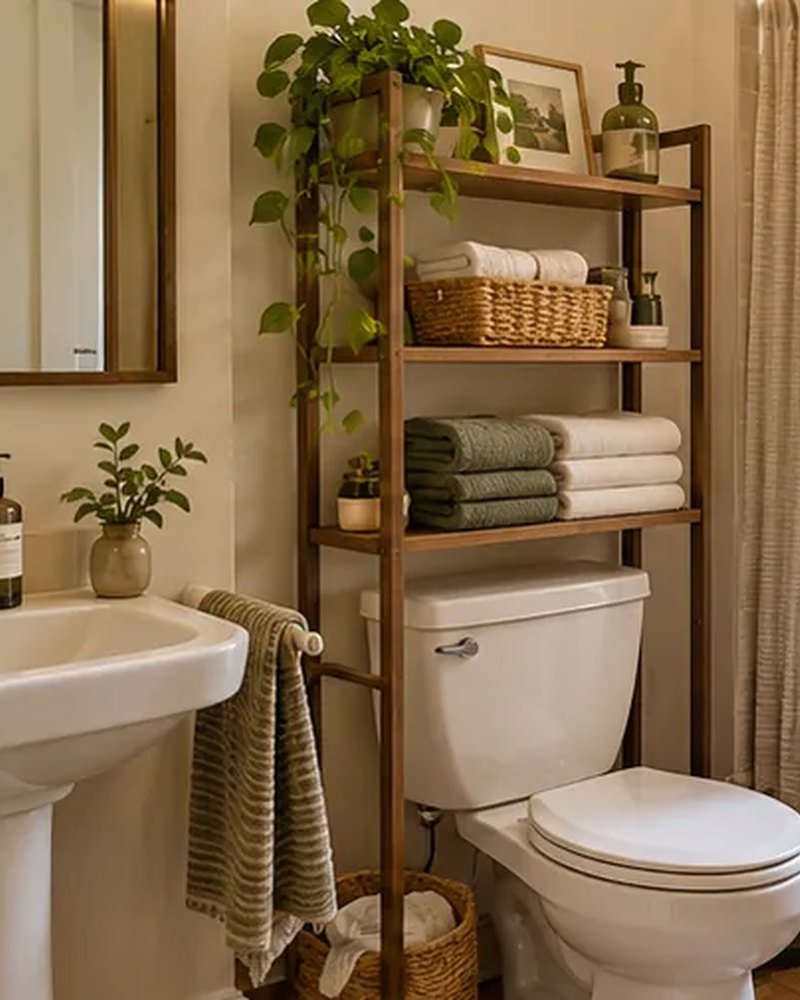
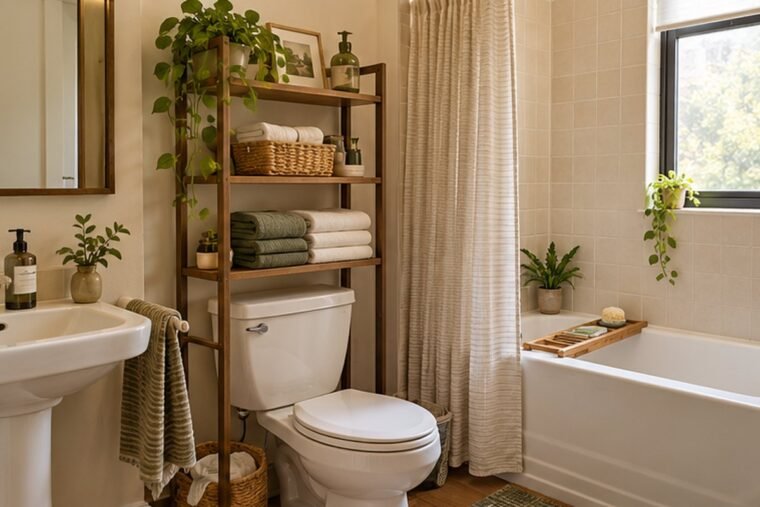
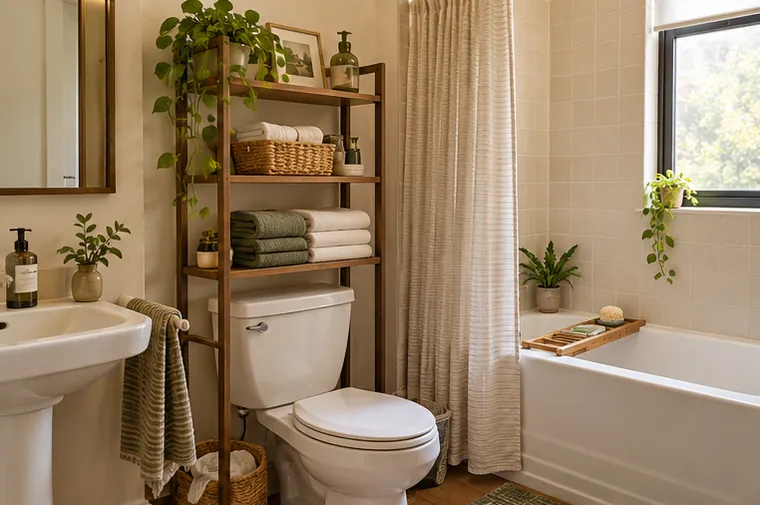
The space above the toilet is often the only unused vertical space in a rental bathroom. A freestanding shelf unit that straddles the toilet adds towel and toiletry storage without touching the tile. Choose one with adjustable shelves so the lowest one sits high enough to lift the tank lid.
Many tall units ship with an anti-tip strap that screws into the wall. If you cannot drill, keep heavy items low and ask your landlord before going without it in a home with young children.
4Store under the bed before you add another dresser
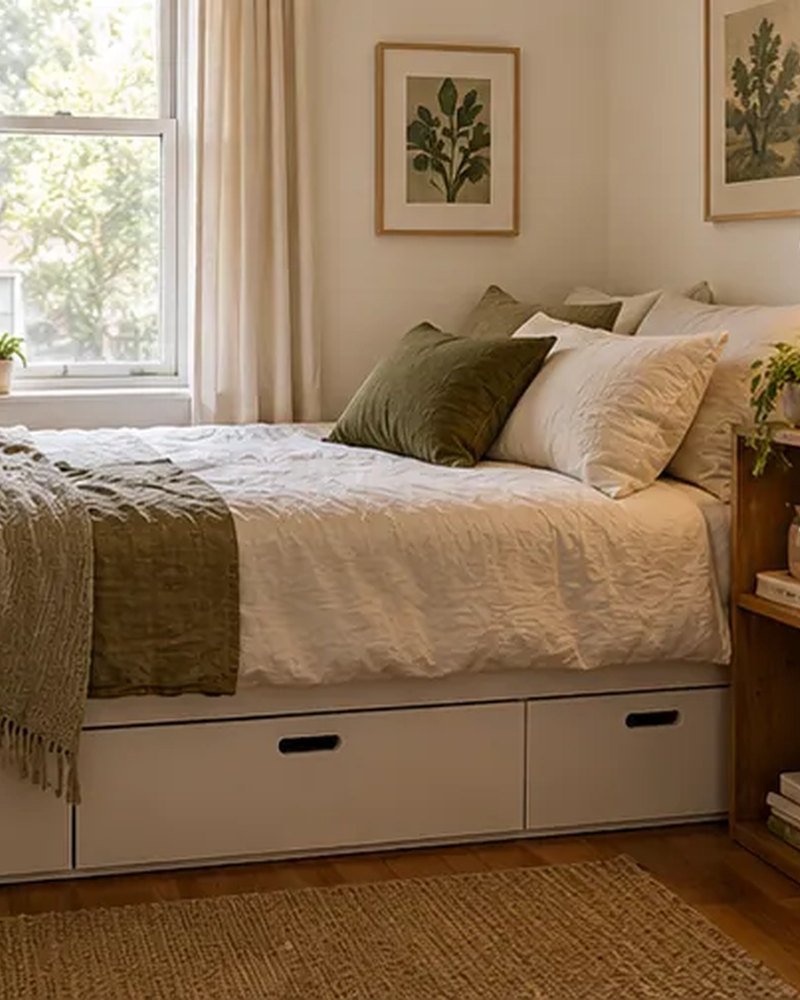
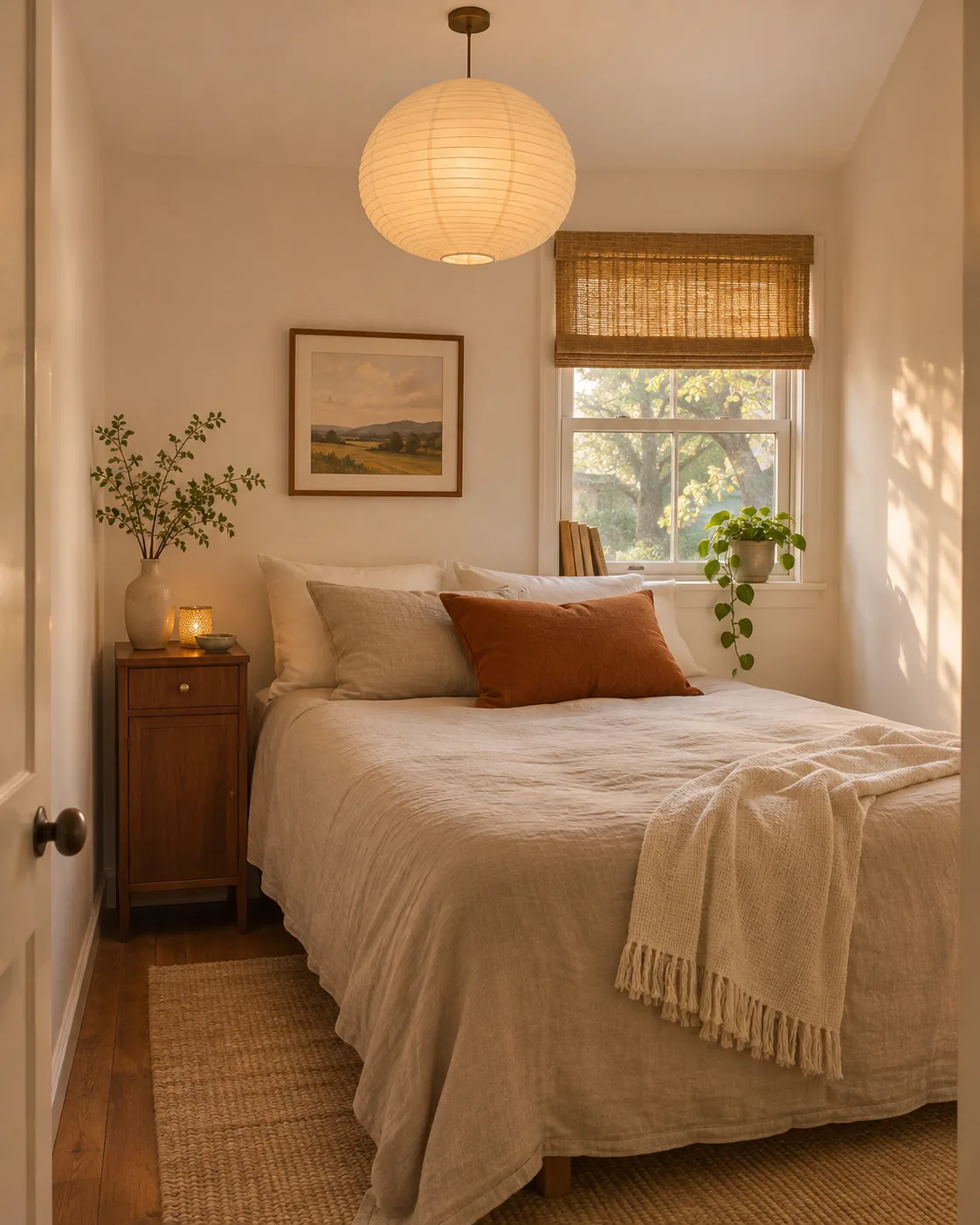
In a small bedroom, the space under the bed is the largest storage area you already have. Drawers on casters or lidded bins keep off-season clothes and spare bedding dust-free and easy to reach.
Measure the clearance between the floor and the bed frame first. If there is not enough, furniture risers can add height, but check that they are rated for the bed and the people sleeping in it. A bed with built-in drawers is the tidiest option if you are buying a new frame anyway.
5Let living room furniture do double duty
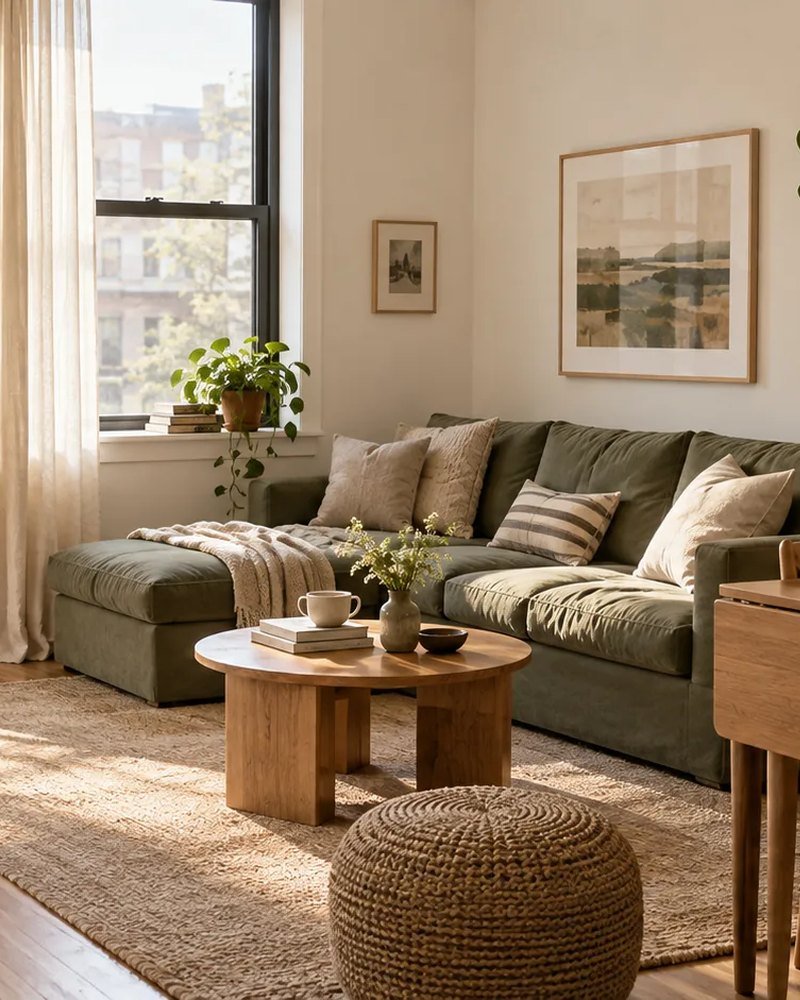
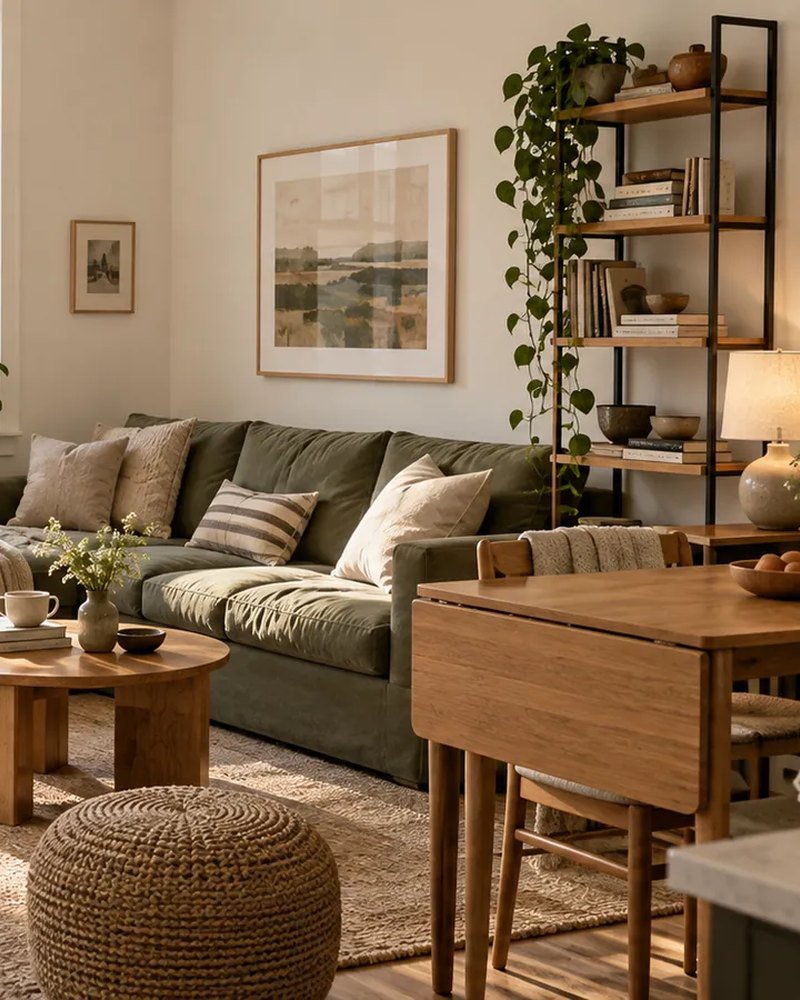
A small living room works best when each piece earns its floor space. A storage ottoman holds throws and board games, a narrow bookcase uses height instead of width, and a drop-leaf table folds away when you are not eating at it.
Keep a clear walking path through the room. Leaving roughly the width of a doorway between the sofa and the coffee table makes the room feel larger than any clever piece of storage.
6Zone a studio with storage instead of walls
In a studio, storage can also define the rooms you do not have. An open bookcase placed at a right angle to the wall separates the bed from the living area while letting light through. Baskets on the lower shelves hold the things you do not want on display.
Anchor tall bookcases when you can, and never place one where it could tip onto the bed. If anchoring is not allowed, choose a lower, deeper unit and keep the heaviest items on the bottom shelf.
Why “no-drill” still needs a plan
Renter-friendly storage is often sold as effortless, but the ideas that last are the ones matched to the room. A tension rod depends on two solid, parallel surfaces.
An adhesive hook depends on a smooth, clean, sealed surface and on the rating printed on its packaging, not on what someone hung from it in a video. A freestanding shelf depends on a level floor and on the heaviest things being at the bottom.
That is why every guide on Our Tiny Place starts with measurements and ends with limits. Before buying anything, write down the width, depth and height of the space, note what is in the way, and check the surface.
Then look at your lease for anything it says about fixings and alterations. A five-minute check is cheaper than a lost deposit, and it makes it far more likely that the storage you buy actually fits the room when it arrives.
The Questions Worth Answering First
Are adhesive hooks safe for renters?
Usually, if they are used within the manufacturer’s weight rating, on the surface the product is designed for, and removed following the instructions. Textured walls, fresh paint and wallpaper can fail or peel.
Can I use tension rods in any cabinet?
Tension rods need two solid, parallel surfaces close enough together for the rod’s range. They grip less well in humid spaces, so check them from time to time.
Do I need my landlord’s permission for freestanding furniture?
Freestanding furniture normally does not need permission. Anchoring it to the wall does, so read your lease and ask in writing if you want to add an anti-tip strap.
How do I measure for storage in a small space?
Measure width, depth and height at the narrowest point, including baseboards, pipes and door swings, and allow room to open drawers and doors fully.
Where to Start
Pick the room that frustrates you most every day, usually the entryway or the kitchen, and fix that one first. One well-measured piece in the right spot will do more for a small rental than a cart full of organizers.