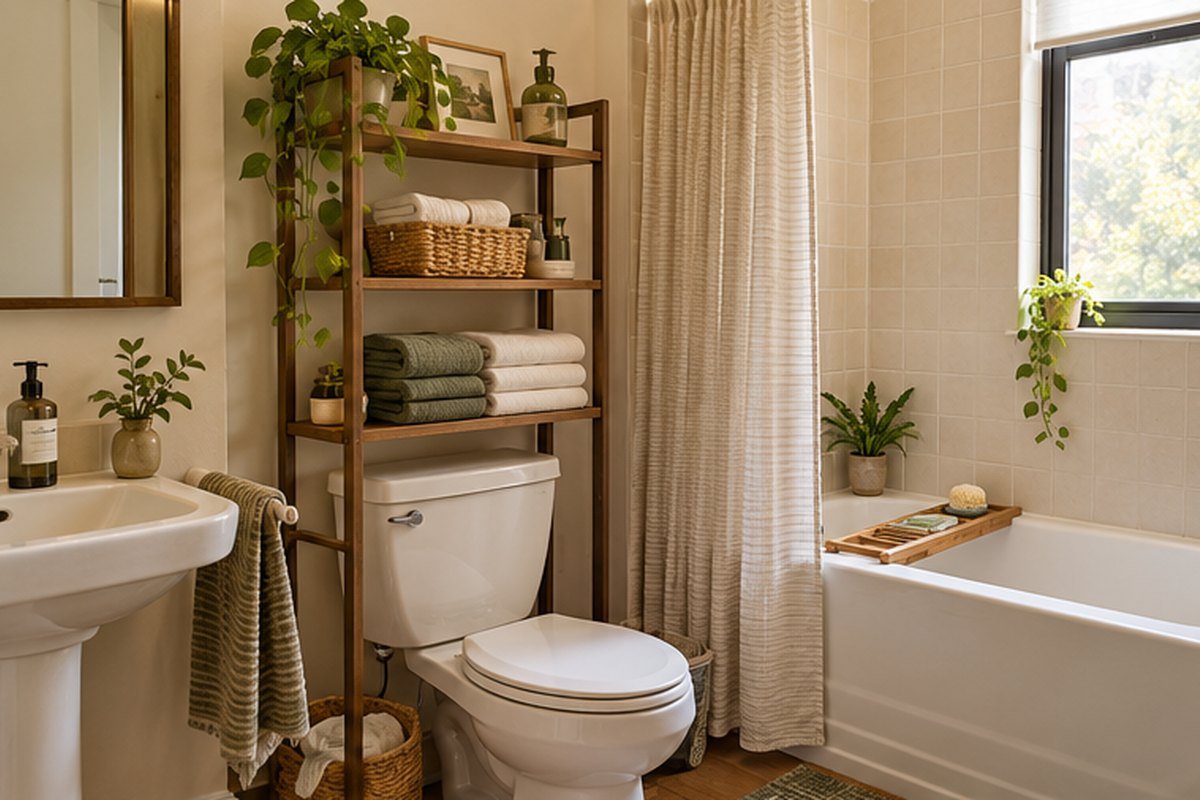
The wall above the toilet is often the only unused vertical space in a small rental bathroom. It is also a spot with real constraints: you need to lift the tank lid for repairs, the wall may be tile you are not allowed to drill, and anything stored there sits above a place you would rather not drop things into. This guide walks through five ways to use that space, what to measure first, and which options stay renter-friendly.
Measure four things before you shop:
- Width: the clear space between whatever sits on either side of the toilet (vanity, wall, tub edge, towel bar), not just the toilet itself.
- Tank width and height: measure the tank at its widest point, and from the floor to the top of the lid. A freestanding unit’s inside leg spacing and first-shelf height must clear both.
- Lid clearance: leave enough room above the tank to lift the lid off completely. Plumbers and maintenance staff need it, and so do you if the flapper fails.
- Depth from the wall: check the distance from the wall to the front of the tank, and how far a shelf can project before it is in the way when you stand up.
1. A freestanding over-the-toilet shelf unit
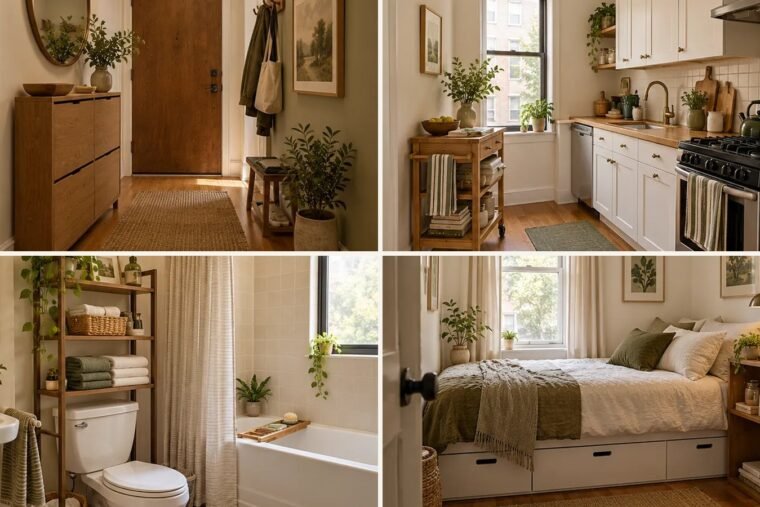
The classic solution is a freestanding frame whose legs straddle the toilet, with two or three shelves above the tank. Because it stands on the floor, it needs no holes in the wall, which makes it the easiest option to take with you when you move.
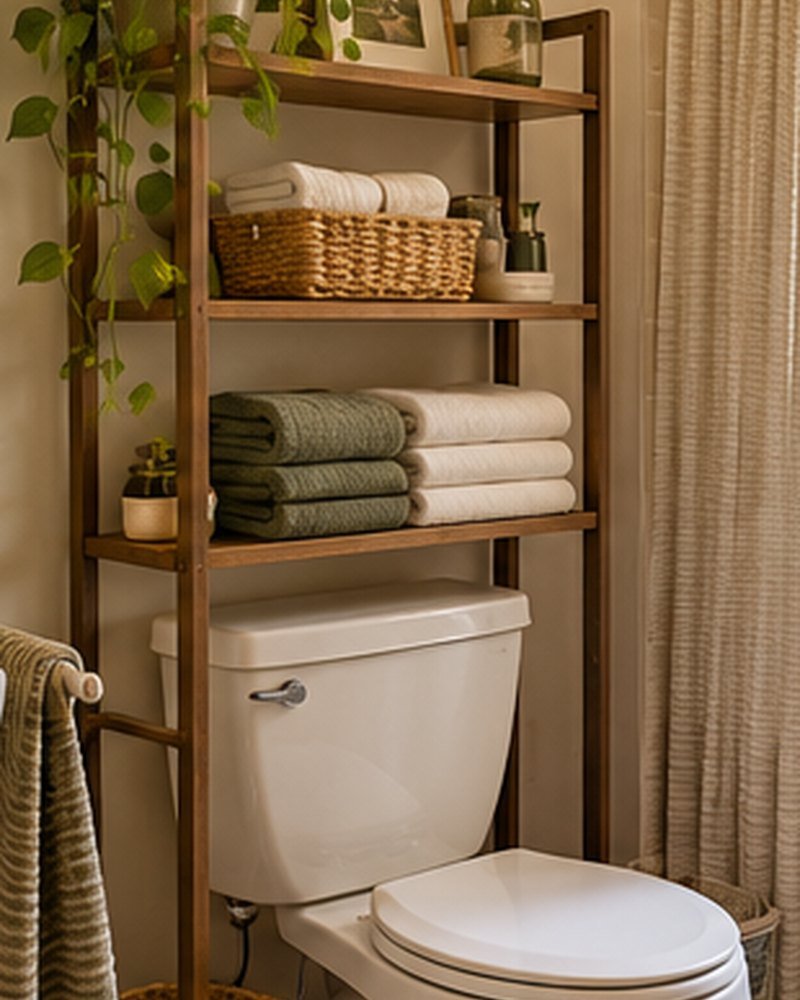
What to look for:
- Adjustable shelves or feet, so the lowest shelf can sit above the lid with room to lift it.
- A stable base. Tall, narrow frames can wobble on uneven bathroom floors. Levelling feet help.
- Closed storage on the lower shelf (a basket or bin) for items you would not want to fall behind the tank.
Many tall shelf units ship with an anti-tip strap that screws into the wall. That is a hole, and it may matter under your lease. If you skip the strap, keep heavy items low, do not overload the top shelf, and follow the manufacturer’s guidance on stability. If the unit is in a home with young children, ask your landlord about anchoring rather than going without.
2. Tension-pole shelving
A spring-loaded pole wedged between floor and ceiling can hold small shelves or baskets beside or behind the toilet. It takes up less floor space than a four-legged frame and leaves the wall untouched.
- Check your ceiling height against the pole’s stated range before buying.
- Poles grip best against a solid, flat ceiling. Textured, drop or sloped ceilings may not give a reliable hold.
- Re-check the tension from time to time; humidity and daily bumps can loosen it.
3. A tray or low caddy on the tank lid
The simplest upgrade: a tray that groups a few items on the lid, so the surface looks intentional instead of cluttered. It works well for a spare roll, a small plant or a candle.
Keep it light and easy to lift off in one move. Anything you have to unpack before opening the tank will slow you down when something goes wrong. Avoid heavy stone or glass pieces here: tank lids are usually ceramic and can crack.
4. A wall cabinet above the tank (landlord approval)
A shallow wall cabinet adds closed storage and often a mirror, but it has to be screwed into studs or with anchors suited to the wall. In a rental, that usually means asking first.
- Read your lease for clauses on wall fixings and request written permission.
- Do not drill into tile without agreement: cracked tile is expensive to match and repair.
- Agree up front on what happens at move-out (leave it, or remove it and patch).
5. Adhesive hooks or a small adhesive shelf, for light items only
Removable adhesive products can hold a hand towel, a small basket of cotton pads or a narrow ledge. They are useful, but they are the option with the most conditions attached.
- Use the manufacturer’s weight rating for that exact product, and treat it as a maximum, not a target. We do not list capacities here because they vary by product and surface.
- Check the surface. Adhesives are generally rated for smooth, clean, sealed surfaces. Textured walls, fresh paint and wallpaper may not hold, and removal can peel paint.
- Bathrooms are humid. Pick products labelled for bathroom or water-resistant use, and follow the curing time before loading them.
- Nothing breakable or heavy above the toilet. Glass jars and heavy bottles belong on a floor-standing shelf.
How the five options compare
| Option | Touches the wall? | Best for | Watch out for |
|---|---|---|---|
| Freestanding shelf unit | No (unless anchored) | Towels, baskets, spares | Stability, lid clearance |
| Tension pole | Ceiling pressure only | Narrow spaces beside the toilet | Ceiling type, re-tensioning |
| Tank-lid tray | No | A few light, decorative items | Must lift off easily |
| Wall cabinet | Yes, screws | Closed storage, mirror | Lease terms, tile |
| Adhesive hooks or ledge | Adhesive | Light items only | Rated load, surface, humidity |
What to store above the toilet (and what not to)
Good candidates are light, unbreakable and used daily or weekly: folded hand towels, spare toilet paper in a closed basket, a small plant, cotton pads in a lidded jar. Keep medication, cleaning chemicals and anything heavy or fragile elsewhere. Cleaning products in particular are better stored low and out of reach if children visit.
For more small-bathroom ideas, browse Bath & Beyond, or see The Renter Edit for reversible upgrades throughout the home.